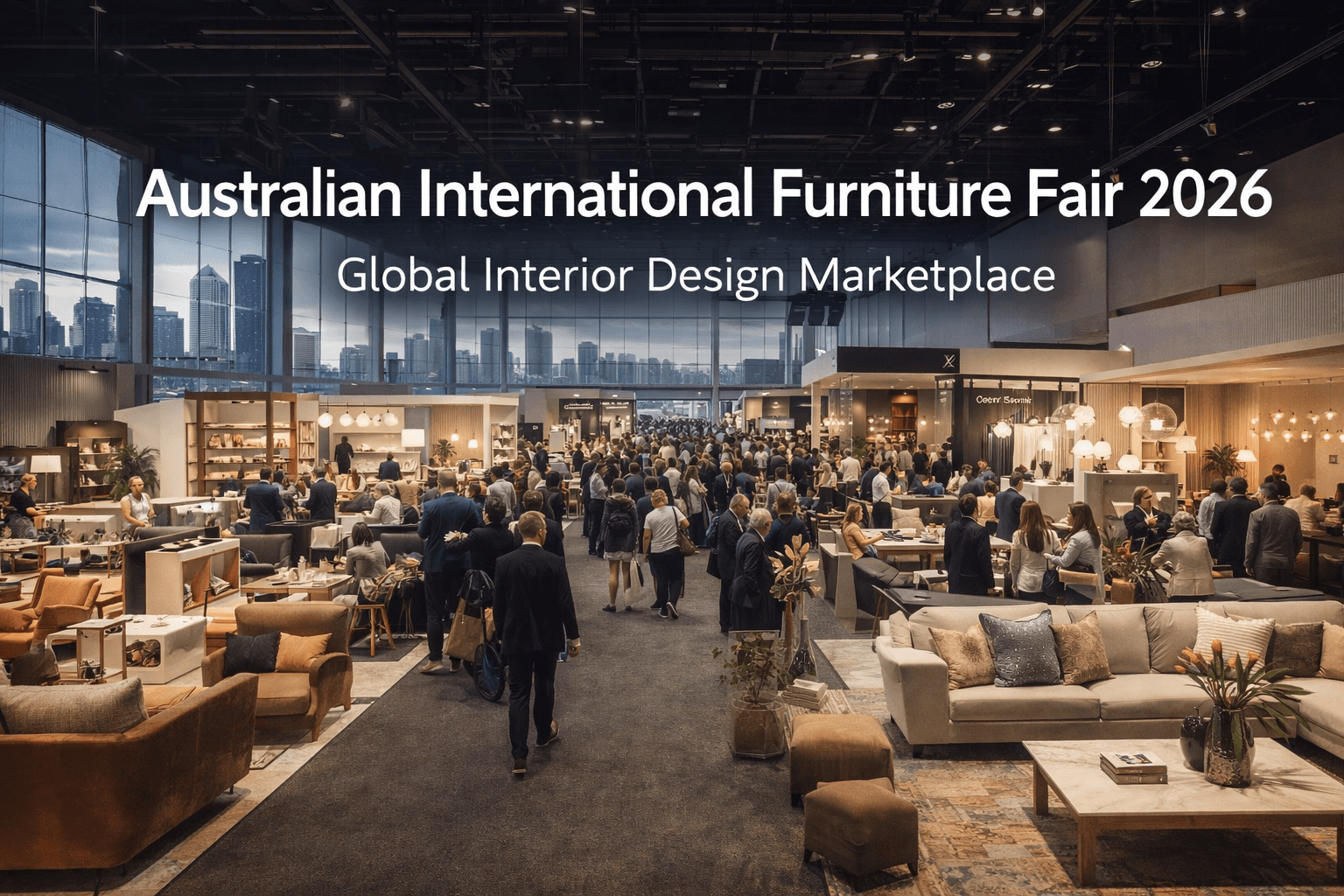
Australian International Furniture Fair 2026: Exploring Opportunities in the Australian Interior and Furniture Market
The Australian International Furniture Fair (AIFF) 2026, scheduled from 15–17 July 2026 in Melbourne, continues to be one of the most significant gatherings for professionals in the furniture, home décor, and interior design industries. Recognized as Australia’s premier trade exhibition for interior products, the fair attracts manufacturers, suppliers, designers, and retail buyers from across Australia, New Zealand, and several international markets.
Each year the event provides a valuable meeting point where businesses exchange ideas, explore new materials, and evaluate design trends that are shaping contemporary interiors. Because the fair runs alongside Decor + Design, the event becomes even more influential, bringing together furniture manufacturers, architects, stylists, and specification professionals within one integrated design environment.
For companies working in home furnishings and decorative products, AIFF offers important insights into the expectations of the Australian interior market.
## Australia’s Interior Market and Growing Demand for Quality Products
Australia represents a stable and design-conscious market for furniture, rugs, and home décor products. Retailers and interior design studios in the region increasingly seek products that combine durability, refined aesthetics, and sustainable materials. Australian consumers also show strong appreciation for natural textures and handcrafted pieces that bring warmth and authenticity into living spaces.
Because of this preference, buyers in Australia often look for products that emphasize craftsmanship, premium materials, and thoughtful design. This growing interest in well-made products has encouraged global manufacturers and exporters to closely observe events such as AIFF in order to understand market expectations and evolving trends.
## A Meeting Place for Designers, Retailers, and Product Innovators
AIFF has developed a reputation as more than just a furniture exhibition. The event functions as a collaborative design hub where interior professionals and manufacturers interact, exchange knowledge, and discover new product possibilities.
Interior designers attending the fair often seek inspiration from a variety of product categories including furniture, decorative lighting, textiles, rugs, and artistic home accessories. By combining these product areas under one exhibition environment, AIFF creates a dynamic platform where design ideas and material innovations influence one another.
This collaborative atmosphere encourages manufacturers to develop products that align with modern architectural and interior design requirements.
## The Rising Importance of Rugs in Contemporary Interiors
In modern interior spaces, rugs have become a central design element rather than simply an accessory. Designers frequently use rugs to define spatial zones, introduce texture, and add warmth to minimal architectural environments.
Australian interiors often favor neutral color palettes, subtle patterns, and natural materials that complement open-plan living spaces. Handmade rugs crafted from wool, silk, or cotton fit naturally within these design preferences, offering durability while maintaining a luxurious appearance.
The ability of rugs to combine practicality with artistic expression has made them increasingly important in both residential and hospitality projects.
## Craftsmanship from Traditional Rug-Weaving Regions
Across the global rug industry, certain regions have developed strong reputations for weaving expertise and material craftsmanship. One such center is Bhadohi in India, widely known as one of the world’s most important hubs for handmade carpet production.
Manufacturers based in this region have built decades of experience in creating handwoven rugs that balance tradition with contemporary design needs. Companies like Dhruv Rugs International represent this heritage by focusing on premium materials, skilled weaving techniques, and detailed finishing processes.
The production journey typically begins with carefully selected fibers such as wool and silk, followed by natural dyeing processes that produce rich and long-lasting colors. Skilled artisans then weave the designs on traditional looms, after which the rugs pass through several stages including washing, stretching, clipping, carving, and finishing.
These steps ensure that each rug maintains structural stability, refined texture, and visual depth.
## Global Trade Events as Sources of Market Insight
Even when manufacturers are not directly exhibiting at international fairs, trade events like AIFF provide valuable insight into how global markets are evolving. Observing product presentations, design directions, and buyer preferences helps manufacturers refine their own collections and better serve international clients.
The Australian market in particular places strong emphasis on quality and reliability. Buyers often look for suppliers who demonstrate consistent manufacturing standards and the ability to produce durable, well-finished products.
By understanding these expectations, manufacturers across the world can align their product development strategies with the needs of international buyers.
## The Continued Value of Handmade Products
In recent years, consumers have shown increasing interest in products that carry individuality and craftsmanship. Handmade items offer qualities that mass-produced goods often lack, including subtle variation, artistic detail, and a connection to traditional techniques.
Handwoven rugs illustrate this shift clearly. Each rug represents hours of skilled labor and careful material preparation. This human element adds character to interiors, transforming rugs from simple floor coverings into design features that contribute to the overall atmosphere of a space.
Manufacturers such as Dhruv Rugs International continue to preserve these traditions while adapting their designs to contemporary interior trends.
## Australia’s Design Landscape and Future Opportunities
Australia’s design industry continues to expand, supported by strong residential development, growing hospitality projects, and increasing consumer interest in thoughtfully designed homes. As a result, the demand for distinctive furniture and décor products is expected to grow steadily.
Trade exhibitions like AIFF provide valuable visibility into these opportunities by bringing together buyers and designers who influence purchasing decisions across the region. For manufacturers and exporters observing the event, the fair offers an opportunity to better understand the direction of the Australian interiors market.
## Conclusion
The Australian International Furniture Fair 2026 remains one of the most important events for the furniture and interior design sector in Australia and New Zealand. By connecting retailers, designers, and manufacturers, the fair continues to highlight the evolving relationship between craftsmanship, design innovation, and global sourcing.
For companies working in the handmade rug and décor industry, observing global events such as AIFF provides valuable insights into international trends and buyer expectations. Manufacturers from established craft regions—including companies like Dhruv Rugs International—continue to contribute to this global design ecosystem through their dedication to material quality, traditional weaving expertise, and careful finishing techniques.
As interior design trends move toward authenticity, sustainability, and refined craftsmanship, the appreciation for handmade rugs and thoughtfully crafted décor products is likely to grow even further in markets around the world.