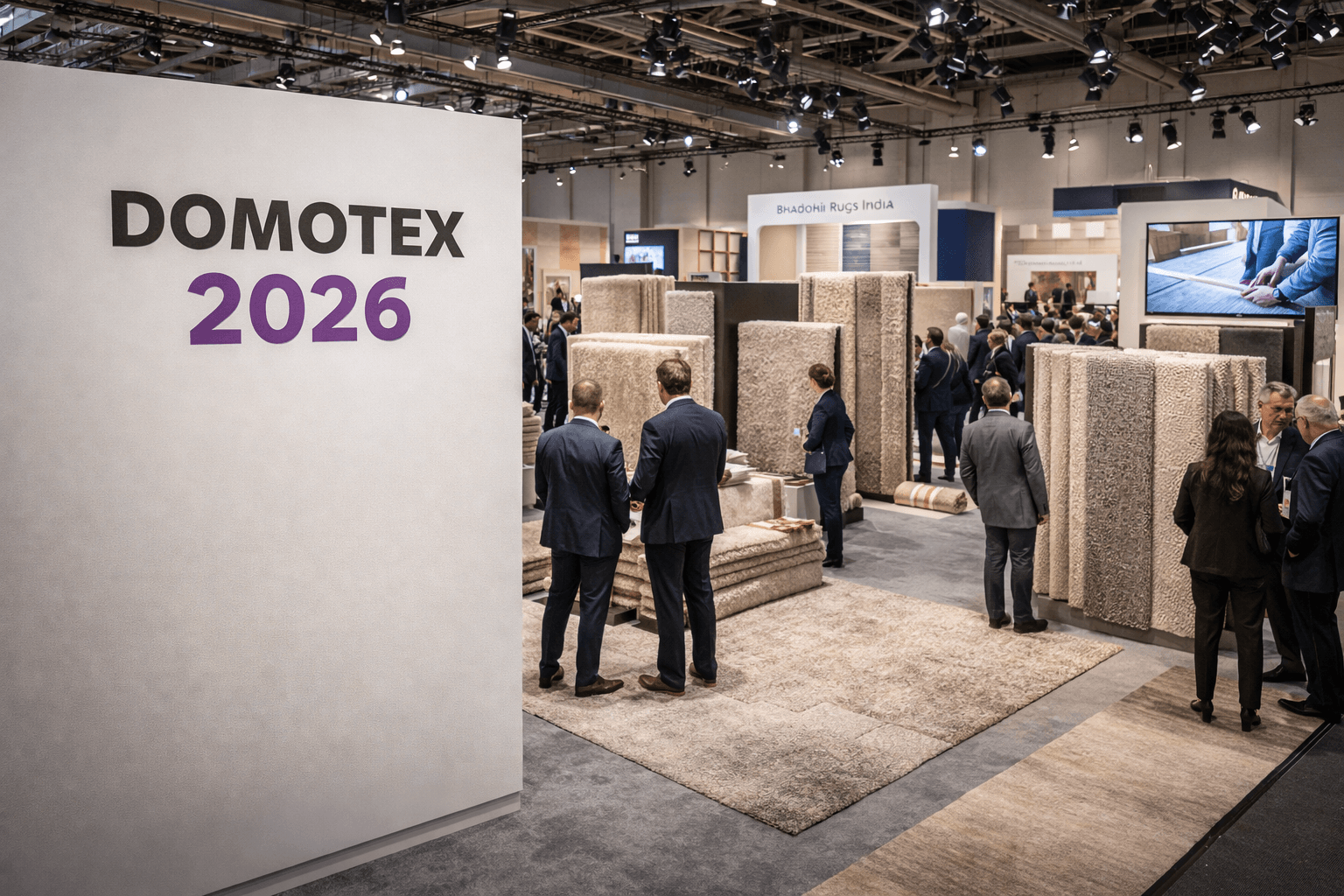
Domotex 2026: Where the Global Flooring and Carpet Industry Aligns on Quality, Innovation, and the Future of Design
As the global flooring and carpet industry recalibrates in response to changing consumer expectations, sustainability mandates, and evolving design philosophies, Domotex 2026 emerges as one of the most important reference points for the sector. Long regarded as the world’s leading trade fair for carpets and floor coverings, Domotex has evolved beyond a traditional exhibition into a strategic platform where manufacturers, buyers, designers, architects, and industry leaders assess direction, capability, and long-term opportunity.
By 2026, the flooring industry is no longer defined by volume alone. Decision-making increasingly centers on material integrity, performance standards, design relevance, and supply reliability. Domotex reflects this shift with clarity, offering a comprehensive view of how global flooring markets are responding to higher expectations and tighter benchmarks.
---
## Domotex as an Industry Barometer
Domotex has always served a dual role: marketplace and measurement tool. For buyers and specifiers, it provides an efficient way to evaluate manufacturers across regions, technologies, and product categories. For producers, it functions as a mirror—revealing how quality, design language, and production standards compare against global peers.
What makes Domotex particularly influential is its focus on flooring as an integrated system rather than an isolated product. Carpets, rugs, resilient flooring, natural materials, and technical surfaces are presented within the context of architecture, hospitality, commercial design, and residential living. This perspective clarifies not only what is being produced, but how it is being used.
By 2026, Domotex is firmly positioned as a fair where quality differentiation matters more than novelty, and where manufacturers are evaluated on consistency, capability, and long-term relevance.
---
## Shifting Priorities in the Global Carpet and Rug Market
The global carpet and rug industry has undergone significant transformation over the past decade. Markets that once prioritized low cost and rapid turnover are now demanding durability, transparency, and design discipline. This shift is clearly reflected in the collections and conversations surrounding Domotex.
Handmade and premium rugs continue to hold a critical position, especially for hospitality, high-end residential, and design-led commercial projects. These segments require products that perform under real-world conditions while maintaining refined aesthetics. Simultaneously, machine-made and technical flooring solutions are expected to meet higher thresholds for wear resistance, maintenance efficiency, and environmental compliance.
Domotex captures this full spectrum, illustrating how different segments are converging around shared standards of quality and responsibility.
---
## Design Direction: Restraint, Texture, and Architectural Relevance
A consistent signal from Domotex is the move away from decorative excess. Design language across flooring categories has become more restrained, architectural, and tactile.
By 2026, carpets and rugs are increasingly specified as spatial tools rather than visual centerpieces. Texture replaces pattern as the primary design driver. Neutral and mineral palettes dominate, allowing flooring to support architecture rather than compete with it. Subtle tonal variation, surface depth, and material honesty are prioritized over bold motifs.
This evolution shifts success metrics for manufacturers—from speed and volume to precision, control, and execution quality.
---
## Quality as a Strategic Differentiator
Quality has emerged as the most decisive factor in flooring procurement. Buyers tracking Domotex are evaluating construction, density, finishing, fiber integrity, and long-term performance.
In the handmade rug segment, this translates to tighter weaving standards, superior yarn selection, improved finishing processes, and stronger structural stability. Rugs are expected to retain form, texture, and color under sustained use, particularly in demanding environments such as hotels and public spaces.
Domotex reinforces a clear message: quality leadership is no longer optional—it is foundational.
---
## Sustainability as an Operational Requirement
At Domotex, sustainability is treated not as a design theme but as an operational requirement. Buyers expect transparency around material sourcing, production processes, waste management, and environmental impact.
Natural fibers, responsible dyeing methods, and reduced chemical use are central to the discussion—especially in the rug and carpet sector. When managed responsibly, handmade production aligns naturally with these expectations due to its lower energy footprint and emphasis on skilled labor.
By 2026, sustainability is assumed as a baseline rather than promoted as a differentiator.
---
## Indian Manufacturing in the Global Flooring Landscape
India continues to play a vital role in the global carpet and rug supply chain, particularly in the handmade segment. Regions such as Bhadohi are internationally recognized centers of expertise.
What has changed is the level of expectation placed on Indian manufacturers. Buyers now assess not only craftsmanship, but also process discipline, consistency, scalability, and quality control. Indian producers that invest in refined materials, structured production methods, and strong internal systems are increasingly competitive on performance and reliability—not price alone.
---
## DhruvRugs: Alignment with Global Industry Standards
Within this evolving landscape, DhruvRugs represents a new generation of Indian manufacturers aligning closely with global benchmarks reflected at Domotex. Rooted in Bhadohi’s weaving heritage, the brand has elevated its focus on material refinement, construction discipline, and production consistency.
Rather than pursuing volume-driven output, DhruvRugs prioritizes yarn quality, engineered density, and controlled finishing. Its design language—defined by restrained palettes, textured surfaces, and architectural compatibility—mirrors the global direction shaping contemporary interiors.
Equally important is operational readiness. Stock continuity, quality consistency, and supply reliability position DhruvRugs in line with what international buyers increasingly require for long-term partnerships.
---
## Domotex as a Strategic Reference Point
Beyond the exhibition itself, Domotex functions as a strategic reference for the global flooring industry. The benchmarks it establishes influence sourcing strategies, product development cycles, and design decisions long after the event concludes.
Manufacturers and buyers use Domotex to validate direction—confirming alignment with industry evolution or identifying the need for recalibration.
---
## Conclusion: Standards, Not Spectacle
Domotex 2026 reinforces a clear message: the future of the flooring and carpet industry belongs to manufacturers who prioritize quality, consistency, sustainability, and design relevance. Spectacle has given way to substance. Excess has been replaced by restraint. Short-term appeal has уступed to long-term value.
For Indian manufacturers and global buyers alike, Domotex provides clarity on what matters now—and what will matter in the years ahead. As flooring continues to play a strategic role in architecture and interior design, alignment with the benchmarks represented by Domotex remains essential.
In 2026 and beyond, the industry is no longer asking who can produce the most—but who can deliver the best, consistently, responsibly, and at scale. Domotex remains where those answers come into focus.